
School Readiness
Supporting children to feel confident, capable, and ready for their next learning journey.
School readiness is embedded in everything we do. Through play, inquiry, collaboration, and emotional development, children build the confidence, independence, and foundational skills that support a successful transition to school and beyond.
Independence is variable and dependent on each child’s abilities and personality type. Some children can confidently learn to take their shoes on and off by themselves at 18 months old, others are ready to learn these skills at closer to 3 years old. We meet each child where they are at developmentally and tailor the independent skills that are appropriate for them. We work with their innate resilience and determination so they are learning that even when something is tricky, they can achieve hard things, that they are truly capable.
The pride and confidence developed by achieving a new skill, like putting their personal possessions in their back pack, is self evident in the pride that radiates through their whole sense of self once they can achieve something that was once difficult for them. We work on independence skills to help the children feel confident and self assured in their own abilities so when they are at primary school, in an unfamiliar environment, they are again self assured that they can do the hard things there too. We are building capacity, self confidence, belief in ones self, and a mind set that if I keep trying I will be able to do it eventually.
Confidence to speak up for yourself and be your own self advocate, or to speak up for those who cannot speak for themselves is a skill we work hard on. Some children are naturally more forward speaking than others, but by practising in a safe friendly environment ,we build skills so that each child will speak up when it really matters. We encourage and offer opportunities for each child’s voice to be heard and truly value each child’s thoughts, feelings and opinions. This happens incidentally throughout the day, in small group projects where children work together towards shared goals and in large group discussions. Our educators work to each child’s strengths and capacity and stretch them to be the best versions of themselves that they can be, pushing them enough to be challenged.
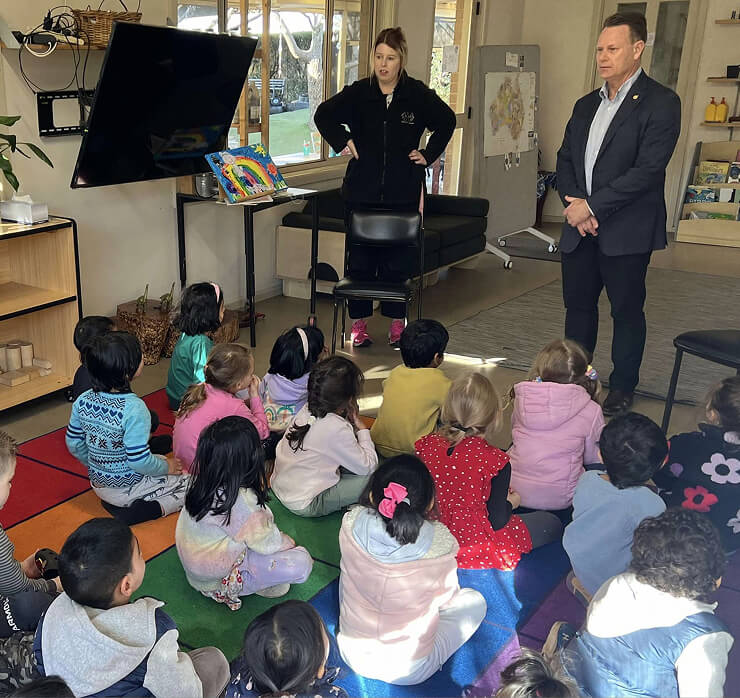
Group times whether as a whole class or as smaller groups we sit children down for short periods of shared learning and investigation. Children develop capacity to listen, learn, pay attention and ask questions at an age appropriate level,increasing the capacity as they are able to. Our babies and toddlers will only sit down for a few minutes at a time singing songs, reading books or exploring a variety of age appropriate concepts. Our preschoolers will start to sit together for more extended periods as they discuss and explore various concepts, learning areas, group projects, or a variety of different engaging literature.
Children are not forced to participate in group times, it is common for new students to observe from afar. Over time children inevitably want to participate and see what is happening among their peer group. This time is enjoyable and filled with learning but
also good practice for their school years, when they will need to be capable of group learning.
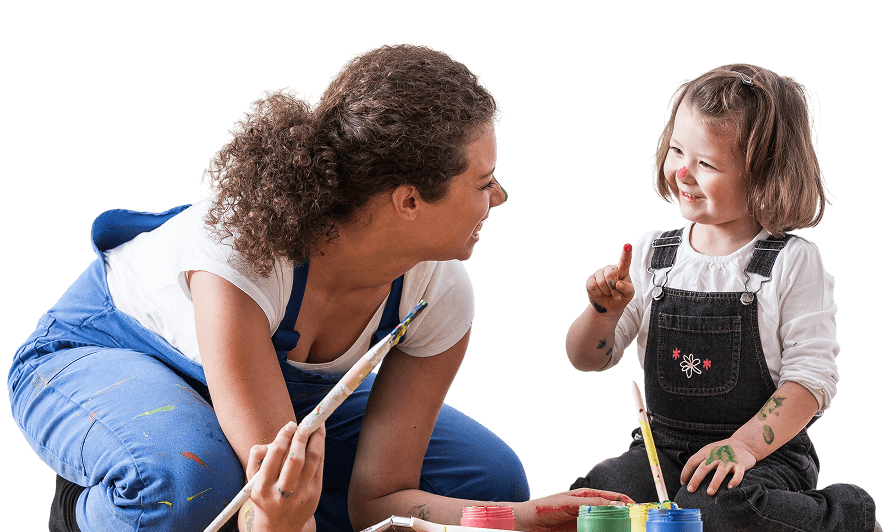
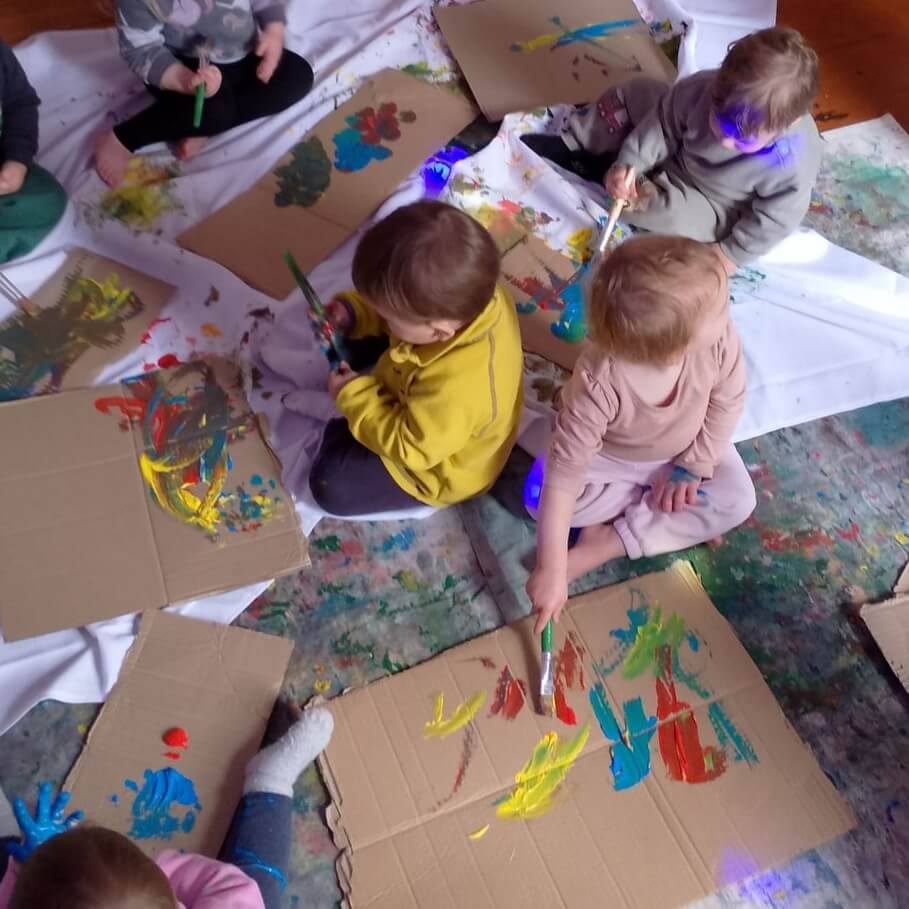
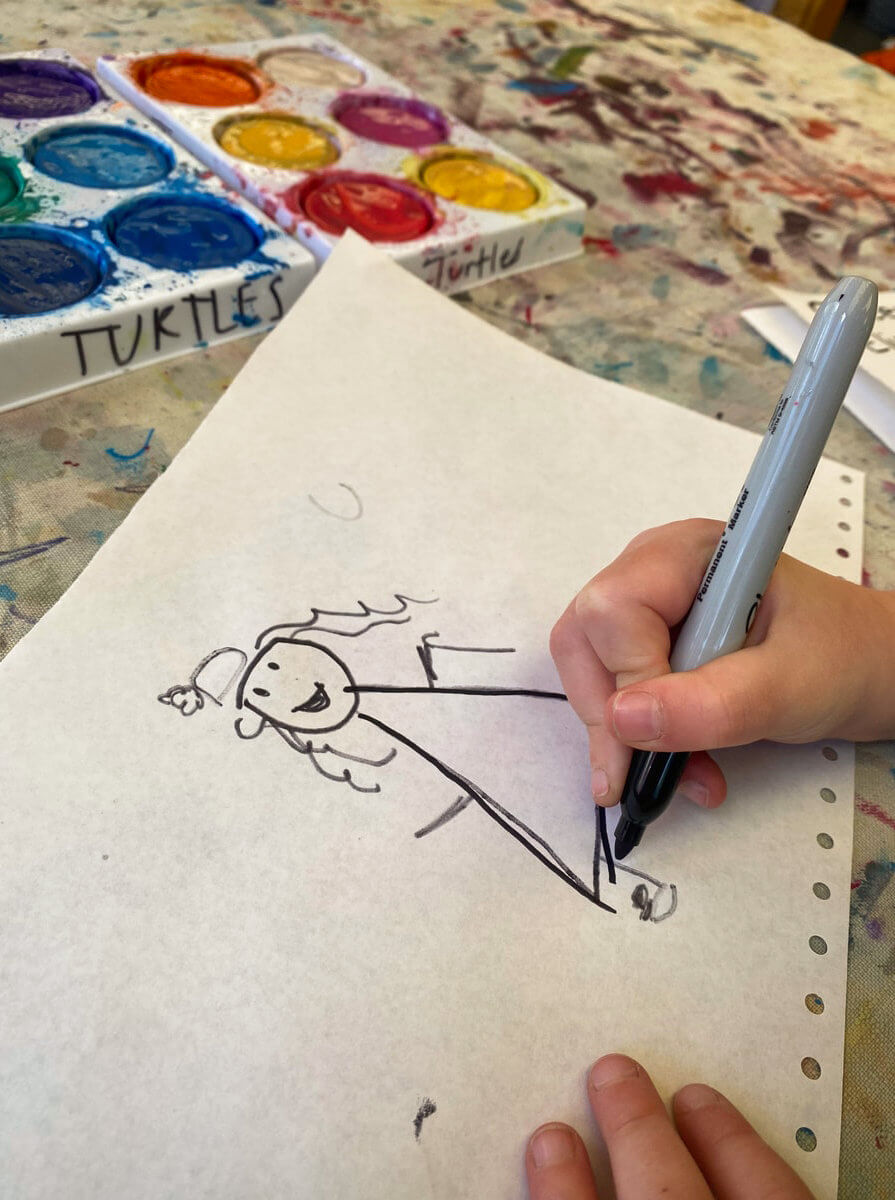
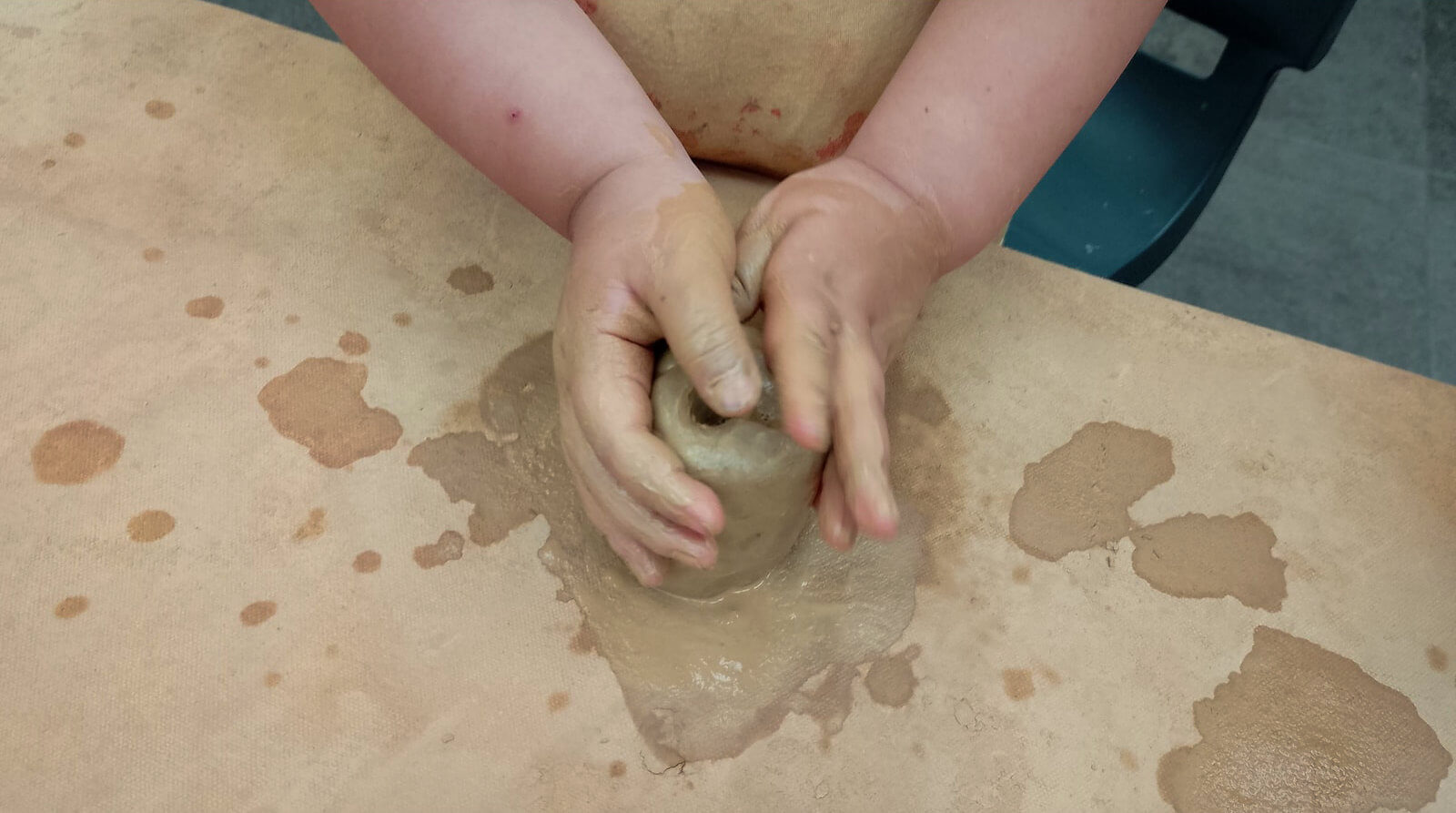
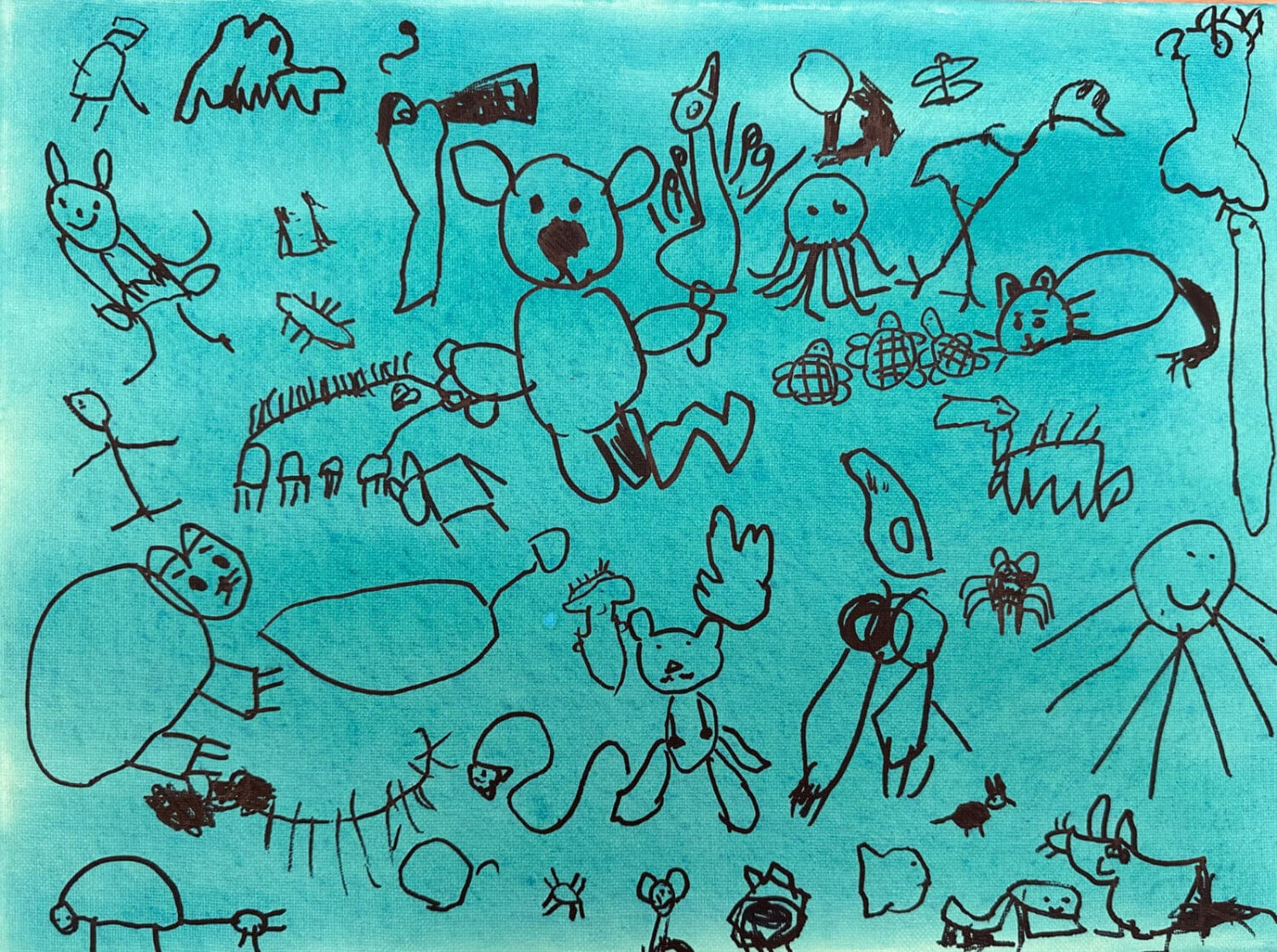
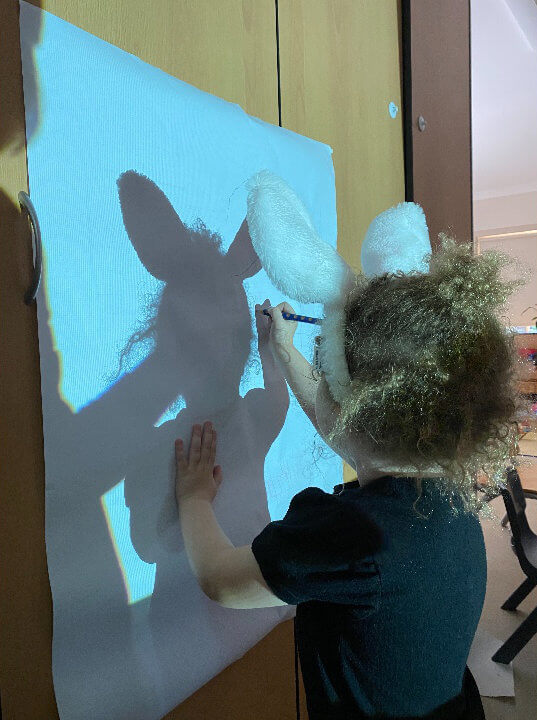
Art is abundant in our centres and a large focus is put on drawing, painting, clay, collage and prewriting skills. Children are taught to use art as a language of self expression, to communicate ideas for others to understand, to convey meaning and even storytelling. Our young children are not yet at a developmental stage where they can sit down and write an entire story but using drawing and pictures they can show another person their stories and thoughts in a pictographic format. They are very capable of drawing feelings, ideas, concepts and directions onto paper long before they have the ability to write articulate sentences and paragraphs. Art is available everyday, multiple times a day in a variety of formats. Some art experiences will be free for anyone to participate and express themselves whilst others will be tailored to a specific group of children with a specific intention. Art is a huge proponent of our school readiness program that allows children to express themselves and their unique perspective of the world, while developing skills needed for school and the rest of their lives.
Literacy is abundant through everyday experiences many books are read each and every day. Joy and love of reading is a high priority, we want children to want to read. To love books, to love language and to love being transported to new and far away places by being fully captivated by the written word. We aim to have high quality books from varying perspectives, about subjects that genuinely interest them. We are always seeking out new and varied reading material that might entice the newest generation of readers and inspire the newest generation of writers.
As the children develop an interest in written words, letters and letter sounds we facilitate this in an age appropriate way. Learning to identify and write their own name is a common pastime that interests many children. Understanding that each letter has a separate meaning and sound, that they will sound different depending on the way they are put together is a game often played by our older children.
We do not explicitly teach reading as that is something best left for school. We have spoken to many teachers over the years including the kindergarten teachers in our local communities and they are all in agreement that children do not need to be reading before they go to school. School teachers all agree that social emotional readiness, play skills, confidence, turn taking, standing up for themselves and the ability to look after their own possessions are more important before starting school.
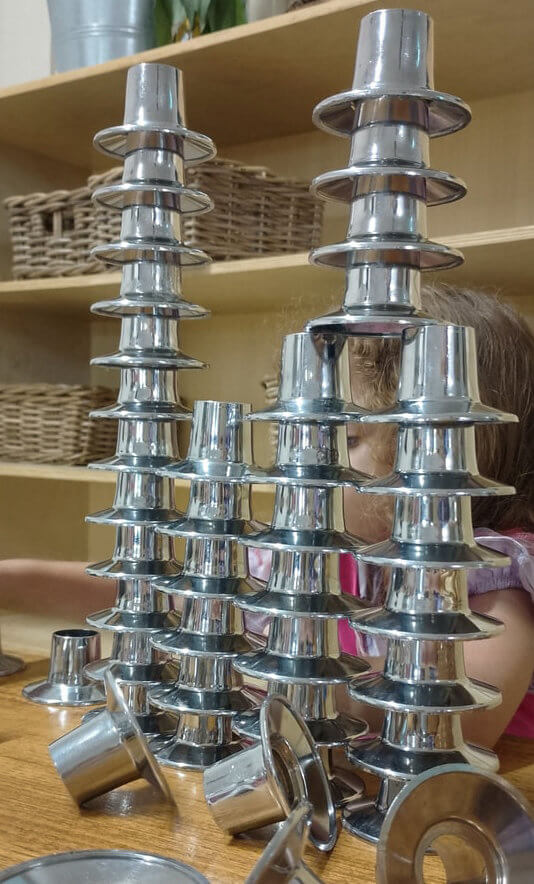
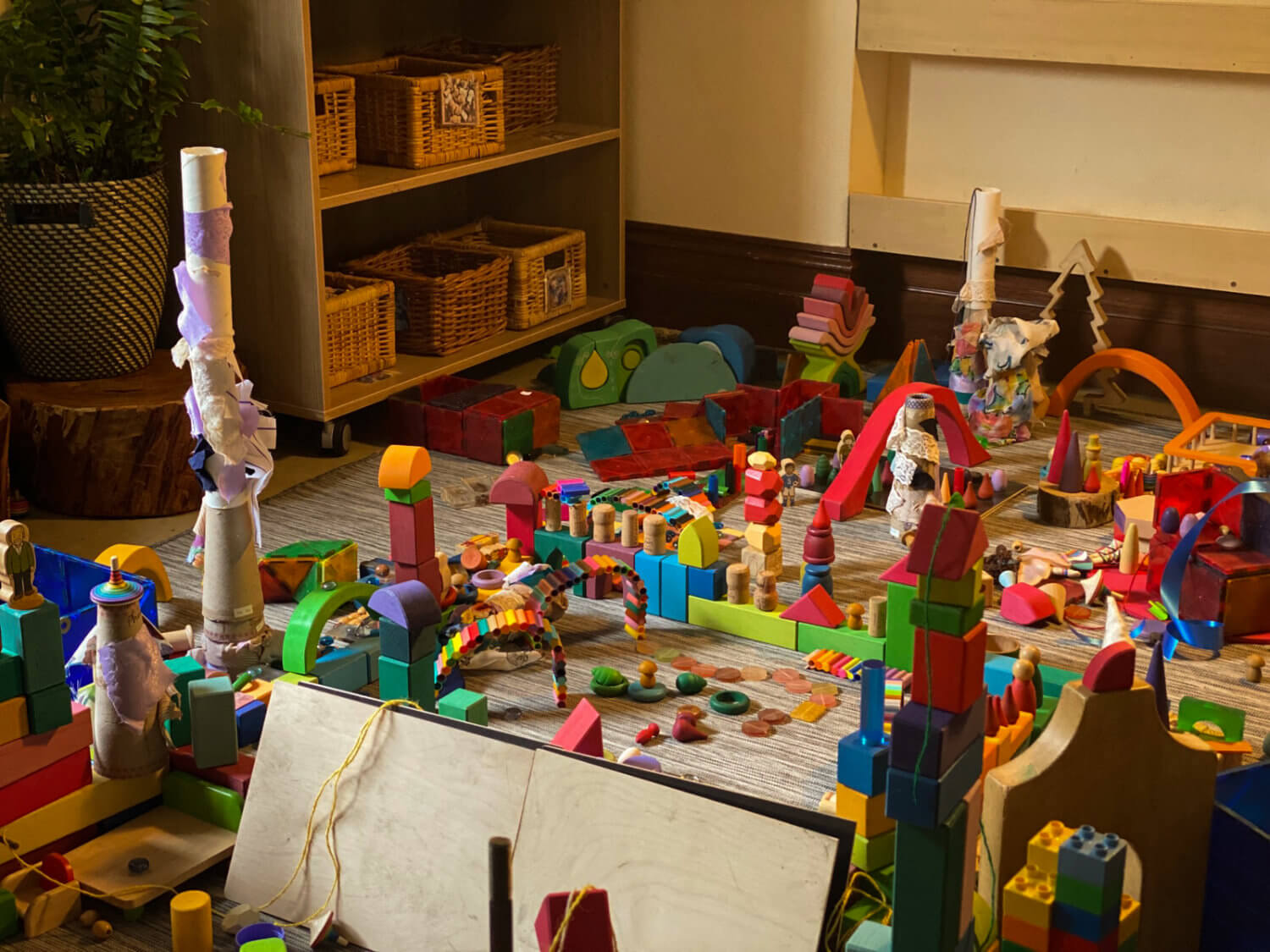
Maths is everywhere. We do lots of counting, patterns, measurement, geometry, mapping and quantities. Maths at this age is best learnt through real life experiences, play and art. Many of the carefully curated resources (toys) we use every day lend themselves towards mathematical concepts. For example magnet blocks lend themselves to geometry but we also use them to explore concepts such as height, length and pattern. Offering tape measures and sometimes even ladders along with the magnet blocks increases the learning exponentially.
Our collections of loose parts also naturally lend themselves to mathematical concepts in their quantity and the way that they are used to carefully curate concepts, patterns, illustration and collections of like and dissimilar objects.
Turn Taking is another important skill for school readiness. In a group environment, children learn to wait, share, and take turns with attention, resources, and opportunities. Educators carefully support fairness so that every child has a chance to participate. Children who are more confident learn to wait, while quieter children are encouraged to speak and be heard. Developing these social skills helps children feel capable and secure when they move into a larger school environment.
Transition to School
In the year before school, our educators place additional focus on helping children develop the confidence, independence, and resilience needed for a successful transition to primary school. Through group projects, longer investigations, increased responsibility, lunchbox practice and opportunities to take on leadership roles, children gradually build the skills required for a more structured learning environment. We work closely with each child to ensure they feel capable, secure, and excited about the next stage of their learning journey.
Emotional Awareness and Regulation
Learning to understand and manage emotions is an essential part of school readiness. Throughout the day, educators support children to recognise their feelings, express themselves appropriately, and develop strategies to cope with frustration, disappointment, and challenges. Children are guided to use words to communicate their needs, to seek help when required, and to show empathy towards others. Developing emotional regulation helps children feel secure in themselves and better able to participate in group learning environments.
Problem Solving and Conflict Resolution
Conflict and problem solving are natural parts of childhood and important learning opportunities. Educators support children to work through challenges together, listen to different perspectives, and find fair solutions. Rather than solving problems for children, we guide them to think, negotiate, and try again. These experiences help children develop resilience, patience, and the ability to work cooperatively with others — skills that are essential for a smooth transition to school.
Connections with Local Schools and Community
We value strong connections with our local schools and community. Through conversations with local teachers and ongoing professional discussions, we remain informed about the skills that best support a successful start to school. Our focus remains on developing confident, capable, and socially ready children, as we know these qualities are the strongest predictors of a positive transition. When appropriate, we also support families during the transition process and work together to ensure each child feels ready for their next step.
WHAT TO EXPECT
Your Child's Happy Day With Us
Your child will experience structured learning activities designed to build school readiness through our research-based approach. Days include inquiry-based learning, group projects, and play-based activities that develop independence, following instructions, and friendships whilst building early literacy and numeracy skills.
Our experienced educators track each child’s development using research-based methods. You’ll receive detailed progress reports and learning portfolios showing exactly how your child is developing the skills they need for primary school. Our small groups of around 18 children with two qualified educators ensure individual attention.
Research-based program with inquiry learning
Learning portfolios tracking school readiness
Small groups of 18 children with 2 certified educators
Why Families Choose Us
Where Learning Feels Like Home
Child-Centered Approach
We know every child is different. That's why we take time to understand how your little one learns best and what makes them tick.
Partnership with Families
You know your child better than anyone. We love working with you to help them grow, and we'll keep you in the loop every step of the way.
Learning Through Play
Kids learn best when they're having fun. Our activities feel like play but actually build the skills they'll need for big school.
Ready to Enrol Your Child?
Help your child thrive in our boutique, play-filled haven where nature, research and warm hearts guide every moment.


We'd love to show you our beautiful centres
We offer tours most days at 9.30am or 2.30pm please call and book an appointment
02 9626 8727
(Schofields Centre)
02 9631 0953
(Toongabbie Centre)
Schofields Centre
46 Pelican Road, Schofields NSW 2762
- 02 9626 8727
- [email protected]
Monday to Friday: 7:00am – 6:00pm
Toongabbie Centre
54 Binalong Road, Toongabbie NSW 2146
- 02 9631 0953
- [email protected]
Monday to Friday: 7:00am – 6:00pm
Your Frequently Asked Questions
We know choosing a kindergarten is a heartfelt decision, so here are the answers parents ask us most.
How will I know if my child is actually ready for school?
You’ll receive detailed learning portfolios and progress reports showing your child’s development in key school readiness areas. We track literacy, numeracy, social skills, and independence, and we’ll discuss their readiness with you regularly.
What specific skills does the program focus on?
We focus on following instructions, working independently, early reading and writing skills, basic maths concepts, making friends, and problem-solving. All learning happens through our research-based, play-focused approach.
Will my child be ahead of other children when they start school?
Our goal isn’t to create “advanced” children, but confident, curious learners who love learning. Your child will have the foundational skills they need and the emotional readiness to thrive in their new school environment.
Got more questions?
Moments That Matter
Where Learning Begins With Wonder
Step inside our centres and discover play, nature and nurturing expertise woven together.



Contact Us
Get in Touch
Leave your details and we’ll call you soon.